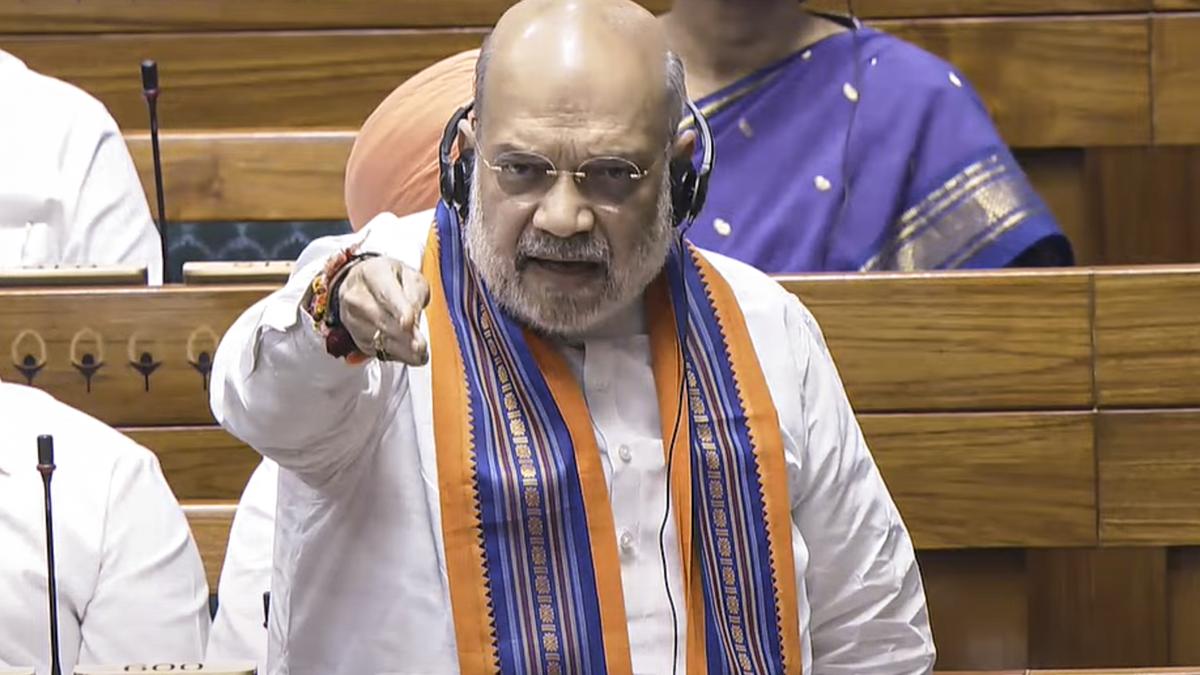
Union Home Minister Amit Shah once again took center stage in Indian politics today, tabling three significant bills in the Lok Sabha, a move that has ignited a fierce political debate and set the agenda for the remainder of the Parliament’s Monsoon Session. The introduction of these bills, aimed at comprehensive legal and administrative reforms, was met with both staunch support from the treasury benches and vehement opposition from the Congress and other INDIA bloc parties.
The proceedings were anything but ordinary, featuring a sharp and personal face-off between the Home Minister and a Congress MP, underscoring the high stakes and deep political divisions surrounding this legislative push.
The Three Bills: A Breakdown of the Proposed Reforms
While the full text of the bills is being examined by legal experts, the broad objectives, as outlined by Amit Shah, point towards a significant overhaul of existing frameworks. Here’s a closer look at each one:
1. The Bharatiya Nyaya Sanhita (Second) Bill, 2025
This bill is a revised version of the legislation meant to replace the Indian Penal Code (IPC). The original version was withdrawn after scrutiny by a Parliamentary Standing Committee. The new bill likely incorporates the panel’s recommendations, aiming to modernize India’s criminal justice system with a greater focus on cybercrime, terrorism, and offenses against women and children. It represents the core of the government’s ambition to shed colonial-era laws and implement a justice system rooted in Indian ethos.
2. The Bharatiya Nagarik Suraksha Sanhita (Second) Bill, 2025
This legislation is proposed to replace the Code of Criminal Procedure (CrPC). Its primary aim is to streamline criminal procedures to ensure faster delivery of justice. Key expected changes include stricter timelines for filing chargesheets and completing trials, provisions for greater use of technology in court proceedings, and measures to protect the rights of victims. The emphasis is on creating a more efficient and citizen-friendly legal process.
3. The Bharatiya Sakshya (Second) Bill, 2025
This bill seeks to replace the Indian Evidence Act, 1872. In the digital age, the nature of evidence has transformed dramatically. This new bill is designed to address these changes by providing a robust legal framework for the admissibility of electronic evidence (e-mails, server logs, digital documents, etc.) in court, bringing the law in line with 21st-century realities and reducing ambiguities in prosecution.
The Parliamentary Theatre: Shah’s Fiery Exchange with Congress
The tabling of the bills was overshadowed by a dramatic and personal confrontation. As Amit Shah stood up to introduce the legislation, Congress MP from Thiruvananthapuram, Shashi Tharoor, interjected, reportedly raising a point of order and making a reference to Shah’s past political history.
In a powerful and swift retort, Amit Shah addressed the Chair and the House, stating, “I would like to tell the member that I resigned before going to jail.” This sharp comment was a pointed reference to his resignation as Gujarat Home Minister in 2010 and his subsequent arrest in 2010 in connection with the Sohrabuddin Sheikh encounter case, for which he was later acquitted by a special CBI court in 2014.
This exchange electrified the House, with BJP members thumping their desks in support of their leader, while the opposition benches erupted in protests. This moment highlights how legislative action in India is often deeply intertwined with political narratives and historical grievances. For a detailed account of this verbal duel, you can read the report by Hindustan Times.
Strategic Preparation: The BJP’s Messaging Blueprint
The introduction of these bills was not a spontaneous event but a carefully orchestrated political strategy. Recognizing the complexity and importance of these reforms, Amit Shah himself chaired a high-level meeting with BJP spokespersons and key party leaders just a day before the session.
The agenda of this meeting, as reported by India Today, was to create a unified communication strategy. Shah briefed the party’s messengers on the intricacies, objectives, and anticipated criticisms of the three bills. The goal was clear: to ensure every party representative, from studio panelists to social media influencers, could effectively defend the legislation and counter the opposition’s narrative, projecting it as a historic step towards “decolonizing” Indian law.
The Larger Political Context: Beyond the Legislation
The timing and nature of these bills cannot be viewed in isolation from the current political landscape.
- Monsoon Session Dynamics: The government is keen to pass crucial legislation before the session concludes. The focus on these bills, along with other agenda items, demonstrates the BJP’s intent to maintain its governance momentum.
- Bihar Elections: The political shadow of the impending Bihar assembly elections looms large over this session. Every parliamentary move is being watched through an electoral lens, with both the NDA and opposition INDIA bloc looking to score political points. The live updates from the Times of India highlighted how discussions often veered towards the Bihar poll scenario.
- Legacy Building: For the Modi government, replacing archaic British-era laws with indigenous codes is a key part of its legacy project. It aligns with its nationalist narrative and its promise of creating a “New India” free from colonial vestiges.
Analysis: The Road Ahead for the Bills
The introduction of the bills is just the first step. They will now be subjected to intense scrutiny.
- Parliamentary Debate: The bills will be sent to a Standing Committee for detailed examination, where opposition members will have the opportunity to suggest amendments and raise objections. The debate on the floor of the House will be heated, focusing on the necessity of the changes and the specific provisions within them.
- Legal Scrutiny: Legal experts and civil society will pore over the fine print, analyzing the implications for civil liberties, the burden on the judiciary, and the practicality of implementation.
- Political Narrative: The BJP will continue to frame this as a progressive, nation-building exercise. The opposition, meanwhile, is likely to attack the bills as rushed, politically motivated, and potentially draconian, attempting to shift the focus from reform to overreach.
Conclusion: A Pivotal Moment in Indian Legal History
Amit Shah’s tabling of the three new bills marks a pivotal moment in the Modi government’s second term. It is an ambitious attempt to fundamentally reshape the bedrock of India’s criminal justice system. However, the path to their passage is fraught with political challenges and demands rigorous democratic debate.