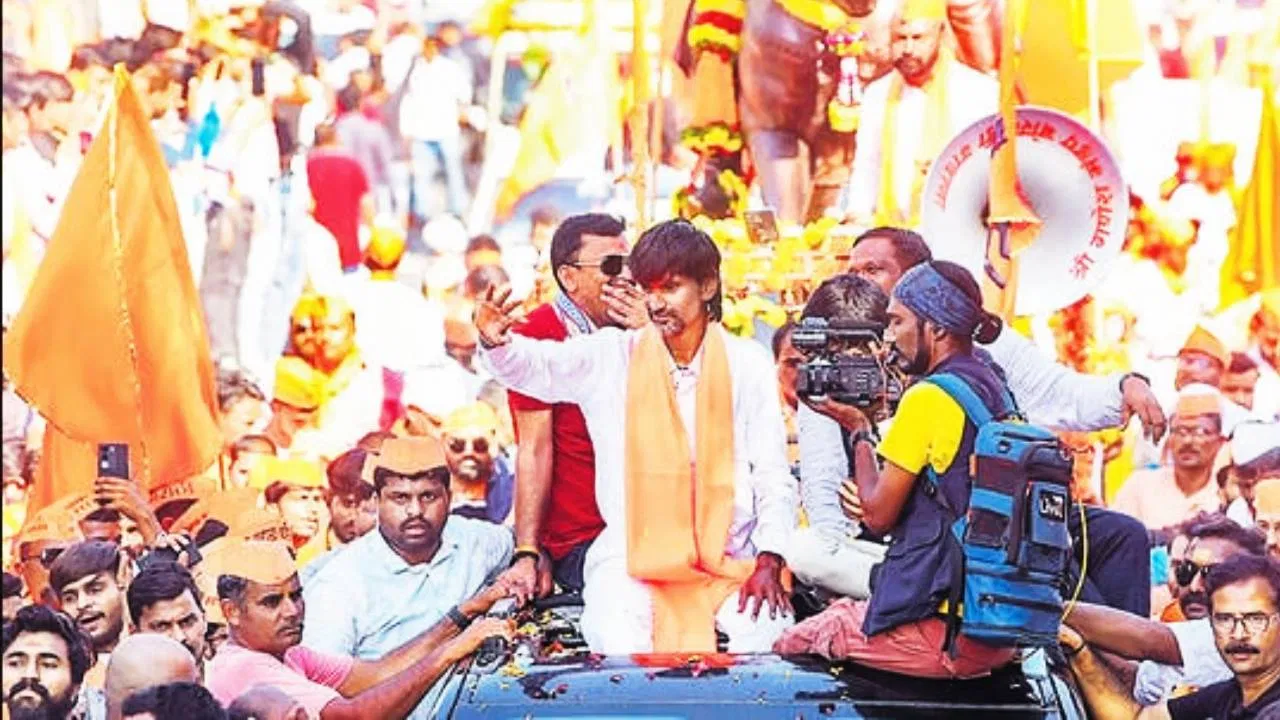
In the heart of Maharashtra, a name echoes through the streets of Mumbai, the villages of Marathwada, and the halls of the state assembly with undeniable force: Manoj Jarange Patil. What began as a solitary voice demanding justice for the Maratha community has snowballed into a statewide movement, capturing national attention and bringing the government to the negotiating table. But who is this man, and why has his crusade for reservation become the defining socio-political issue in Maharashtra today?
This is the story of a common man’s uncommon determination, the deep-seated aspirations of a community, and a protest that has reshaped the political landscape of one of India’s most influential states.
Who is Manoj Jarange Patil? From Obscurity to the Face of a Movement
Manoj Jarange is not a career politician. Hailing from the Antarwali Sarati village in the Jalna district of Maharashtra, he is a farmer and a grassroots activist. His rise from a little-known figure to the paramount leader of the Maratha reservation stir is a testament to the power of perceived authenticity and relentless resolve.
- Implementation of Reservation: The immediate and irrevocable implementation of reservation in education and government jobs for the Maratha community.
- Kunbi Caste Certificates: The inclusion of the entire Maratha community under the Other Backward Classes (OBC) category by issuing Kunbi caste certificates to all Marathas. The Kunbi community, an agrarian group, already enjoys OBC status in Maharashtra. Jarange argues that Marathas and Kunbis are historically linked, and thus all Marathas should be granted OBC status based on this kinship.
The Fire of Protest: Mumbai’s August 2024 Siege
The culmination of Jarange’s movement, so far, was the mammoth rally in Mumbai on August 29, 2024. The event, as reported by major outlets like Hindustan Times and the Indian Express, was a masterclass in organized mass mobilization.
Jarange’s speech at Azad Maidan was a mix of firm ultimatums and emotional appeal. He set a deadline for the government to meet his demands, threatening an even larger protest if the promises were not converted into law. The event was notable for its discipline; despite the enormous crowd, it remained largely peaceful, a fact that even the authorities acknowledged.
A Volatile Standoff: “Give Us Quota or Shoot Us”
Beneath the surface of organized rallies lies a undercurrent of deep frustration and desperation. This was starkly revealed in incidents where the emotions of supporters boiled over. A report from the Times of India highlighted a chilling challenge from a Jarange supporter who, in a video message, told the government, “Give us quota or shoot us.”
This statement, while not from Jarange himself, encapsulates the high-stakes, do-or-die sentiment that fuels the movement. It reflects the years of perceived neglect, unfulfilled promises, and the burning desire for social and educational upliftment that many in the community feel. For them, reservation is not a privilege but a right and a necessary tool for equality.
The Government’s Tightrope Walk: Promises, Panels, and Pressure
The Maharashtra government, led by Chief Minister Eknath Shinde and Deputy CM Devendra Fadnavis, has been walking a political tightrope. On one hand, they cannot afford to alienate the massive Maratha vote bank. On the other, granting the demand outright could lead to a severe backlash from the existing OBC communities, who fear dilution of their share of the reservation pie.
The government’s response has been a mix of negotiation and bureaucratic process:
- Forming Committees: Setting up special panels to expedite the process of issuing Kunbi certificates to Marathas who have historical documentation proving the link.
- Legislative Attempts: The government has previously passed laws for Maratha reservation, but these have been struck down by the Supreme Court in May 2021 for exceeding the 50% quota cap and lacking sufficient data to prove extreme backwardness.
- Dialogue with Jarange: Senior ministers have held multiple rounds of talks with Jarange, persuading him to break his fasts with assurances of action. However, the community’s trust in these assurances is wearing thin, leading to repeated cycles of protest.
The Historical Context: Why This Demand? Why Now?
The Maratha reservation issue is not new. It has simmered for decades. The Marathas, a politically dominant and historically warrior community, constitute nearly one-third of Maharashtra’s population. While the community has produced powerful political dynasties and landowners, a large section of it faces agrarian crises, unemployment, and educational backwardness.
The argument for reservation hinges on this paradox: the community is socially and politically influential yet economically and educationally struggling. Proponents argue that reservation is essential to uplift the vast majority of ordinary Marathas who do not benefit from the community’s political clout. The repeated legal setbacks have only intensified the feeling that only sustained street pressure can force a political solution.
The Road Ahead: Challenges and Implications
The path forward is fraught with complexity.
- The Legal Hurdle: The Supreme Court’s 50% cap on total reservation is the biggest legal obstacle. Including Marathas in OBC or creating a new category would push Maharashtra’s reservation tally well beyond this limit, requiring a constitutional amendment—a lengthy and uncertain process.
- Social Harmony: The movement risks creating a rift between Marathas and OBCs, two electorally crucial blocks. Any perceived injustice to either community could have severe political repercussions.
- The Manoj Jarange Factor: The movement is currently synonymous with its leader. The government’s strategy of engaging directly with him has given him immense bargaining power. The sustainability of the movement and its future direction depend heavily on his next steps.
Conclusion: A Defining Moment for Maharashtra
Manoj Jarange has achieved what few could: he has unified a massive, diverse community under a single banner and placed an age-old demand at the very center of Maharashtra’s politics. His movement is a powerful reminder that in a democracy, change is often driven not from the top down, but from the ground up.