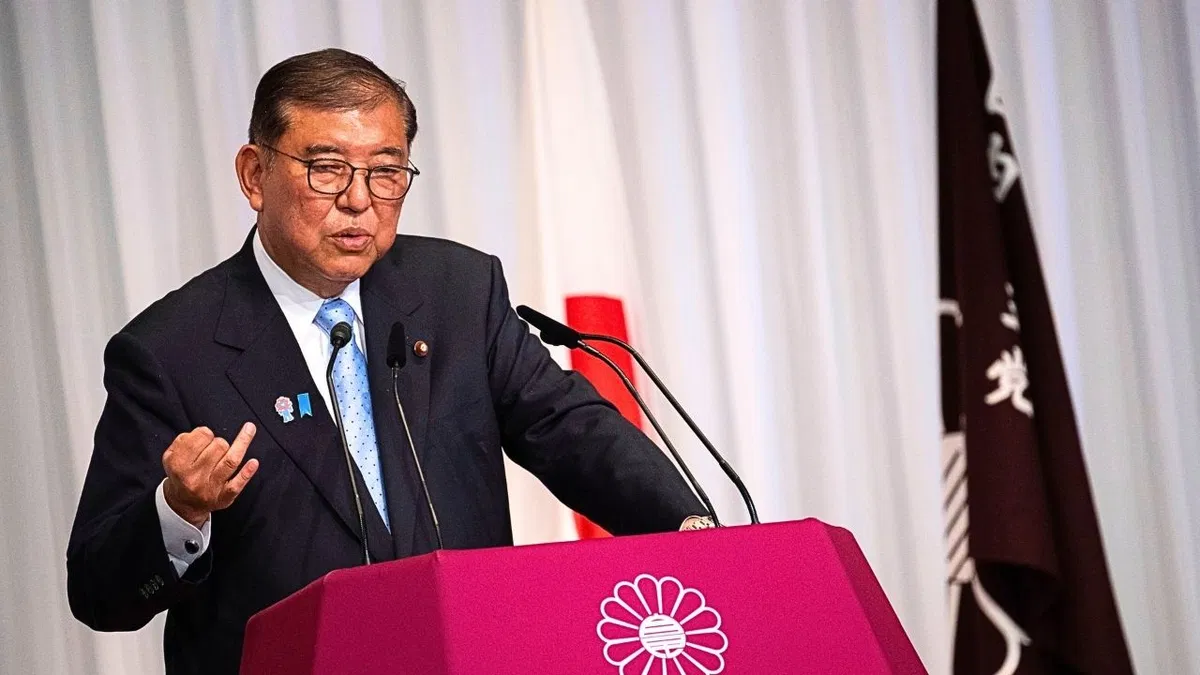
In a stunning political development that has sent shockwaves through the nation and the international community, Japan’s Prime Minister Shigeru Ishiba has decided to step down from his post. This breaking news, first reported by NHK News Japan, comes a mere few weeks after his ruling party suffered a catastrophic defeat in the recent general election, plunging the world’s third-largest economy into a period of profound uncertainty.
The resignation marks one of the shortest tenures for a Japanese prime minister in recent history and underscores the volatile nature of the country’s political landscape. For a leader who came into office with promises of stability and reform, Ishiba’s rapid exit speaks volumes about the challenges facing his administration and the Liberal Democratic Party (LDP) itself.
The Catalyst: A Devastating Election Debacle
To understand the resignation, one must look back at the September 2025 general election, which served as a brutal referendum on Ishiba’s leadership. The LDP, a party that has dominated Japanese politics for most of the post-war era, was handed a significant and humbling loss.
Despite Ishiba’s reputation as a seasoned political veteran and a defense expert, his party failed to secure a majority, losing a considerable number of seats in the powerful lower house of parliament. The election results were interpreted as a clear message from the Japanese public, expressing dissatisfaction with the party’s direction, its handling of the economy amidst global pressures, and perhaps a desire for a change from the decades-long LDP status quo.
The Announcement: NHK Breaks the News
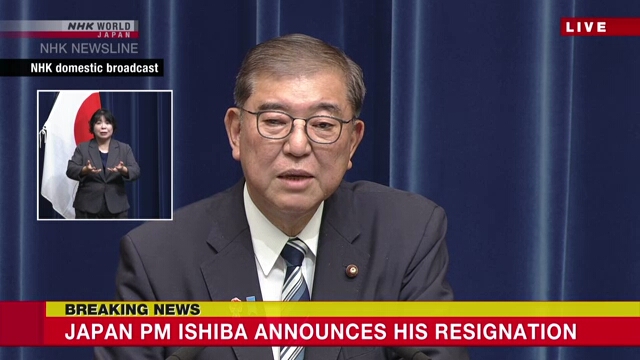
According to the exclusive report from NHK News Japan, the nation’s public broadcaster known for its reliable and swift journalism, Prime Minister Ishiba conveyed his intention to resign to senior officials within the LDP. The reports indicate that Ishiba took “personal responsibility” for the party’s poor performance at the polls.
He believes that a new leadership is necessary for the party to regroup, rebuild public trust, and effectively navigate the complex political gridlock that now defines the Diet (Japan’s parliament). While a formal press conference is expected imminently, NHK’s sources within the party’s upper echelons have confirmed the Prime Minister’s decision, leaving little doubt about the outcome.
Who is Shigeru Ishiba? A Primer on the Outgoing Leader
Shigeru Ishiba is not a newcomer to Japanese politics. A long-serving member of the House of Representatives, he had previously run for the LDP leadership multiple times and held key cabinet positions, including Defense Minister. He was often seen as a principled and knowledgeable figure, particularly on issues of national security.
His ascent to the prime ministership was seen by many as a turning point, offering a potential shift from his predecessors. However, his time at the helm was ultimately defined by the election loss, preventing him from fully implementing his vision for Japan.
What Does This Mean for Japan? The Implications of the Resignation
The immediate aftermath of Ishiba’s resignation plunges Japan into a period of intense political maneuvering. The next steps are critical for the country’s future.
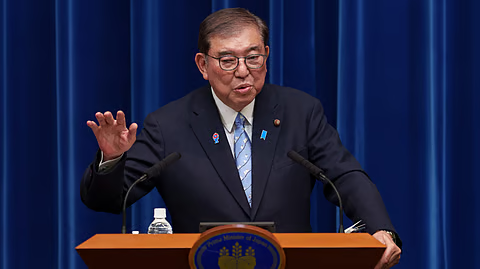
- Leadership Race within the LDP: The ruling party must now swiftly hold a leadership election to choose Ishiba’s successor. This internal battle will likely involve key figures from various factions within the LDP, each vying to steer the party out of its current crisis. The new party president will then be tasked with forming a new government.
- Political Instability and Coalition Building: With the LDP lacking a single-party majority, the new leader will be forced to engage in delicate negotiations with coalition partners to form a stable government. This could lead to compromises on policy and a potential shift in the country’s political priorities.
- Economic and Foreign Policy Uncertainty: Japan faces significant challenges, including a sluggish economy, an aging population, and rising geopolitical tensions in the Asia-Pacific region. This sudden leadership vacuum creates uncertainty regarding the continuity of Japan’s economic and foreign policies. Allies and partners will be watching closely to see who emerges as the new leader and what direction they will take. For insights into Japan’s economic landscape, the International Monetary Fund’s (IMF) page on Japan provides valuable context and data [External Link 1: https://www.imf.org/en/Countries/JPN].
The Role of NHK in Breaking Major News
This event also highlights the pivotal role of NHK News Japan (Nippon Hōsō Kyōkai) as the country’s primary public news source. As a broadcaster with a extensive network of journalists and a mandate for objectivity, NHK is often the first to break major national stories. For a global audience seeking verified information directly from Japan, NHK World-Japan serves as an indispensable English-language portal, translating complex domestic political developments into accessible news for the world. Understanding Japan’s media landscape is key, and organizations like the Reuters Institute for the Study of Journalism often analyze the role of broadcasters like NHK [External Link 2: https://reutersinstitute.politics.ox.ac.uk/].
Looking Ahead: What’s Next for Japanese Politics?
The coming days will be filled with political drama as the LDP scrambles to select a new leader who can unite the fractured party and negotiate a viable path forward. Whether this new leader can provide the stability Japan needs or whether it leads to further political fragmentation is the question now on everyone’s mind. For historical perspective on Japanese prime ministers and their tenures, the official website of the Prime Minister of Japan and His Cabinet offers an archive of past leaders [External Link 3: https://japan.kantei.go.jp/index.html].