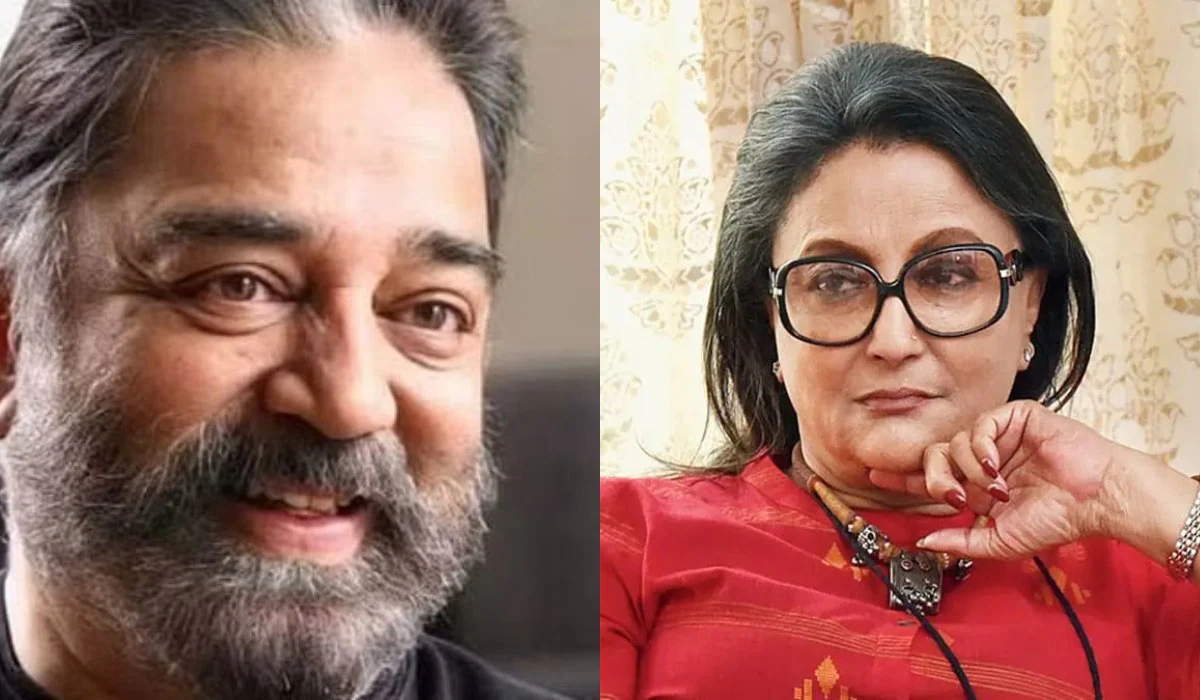
Aparna Sen is not just a name; she is an institution in Indian cinema. A multifaceted personality who has gracefully oscillated between being a celebrated actress, a critically acclaimed filmmaker, and a fearless public intellectual, her career spans over six decades. Recently, her name surged back into the trending topics, not for a new film, but for a fascinating personal revelation from the past that connects two of Indian cinema’s biggest legends. This story, intertwined with her formidable body of work, cements her status as a true cultural icon.
This slice of cinematic history, a testament to Sen’s formidable charm and intellect, offers a glimpse into the personal life of a woman who has always been defined by her professional prowess and strong ideological stance. It’s a doorway to understanding the profound respect she commands across industries and languages.
The Untold Story: Kamal Haasan, Aparna Sen, and the Language of Love
The anecdote, as reported by sources like News18 and The Times of India, adds a layer of romantic folklore to the often-serious discourse around parallel cinema. Shruti Haasan shared that her father, Kamal Haasan, possessed a deep admiration for Aparna Sen that transcended a mere professional crush. To better connect with her and understand her cultural milieu, he embarked on the challenging task of learning Bengali.
The story is significant for several reasons. It highlights the cross-cultural pollination that has always existed within Indian cinema, often behind the scenes. It also showcases Aparna Sen not just as a passive recipient of admiration but as an intellectual force whose appeal was rooted in her mind and cultural depth—a quality that has defined her entire career.
From Child Artist to Silver Screen Icon: The Formative Years
Long before she became a muse to legends, Aparna Sen was a child artist in the world of cinema. Born into a culturally rich Bengali family, her father, Chidananda Dasgupta, was a renowned film critic and one of the founders of the Calcutta Film Society. This environment immersed her in world cinema from a very young age, shaping her critical and artistic sensibilities.
However, Aparna Sen was never content with being just a pretty face on screen. Even during her successful acting career, she was brewing with ideas and a perspective that yearned for a different mode of expression. This restlessness and intellectual curiosity would soon pave the way for her second, and perhaps most defining, act: as a director.
The Auteur is Born: Filmmaking with a Feminist Conscience
In 1981, Aparna Sen made her directorial debut with 36 Chowringhee Lane. The film, starring Jennifer Kendal as an elderly Anglo-Indian schoolteacher facing loneliness and neglect, was a critical sensation. It won the Grand Prix at the Indian Film Festival and established Sen as a filmmaker of extraordinary empathy and nuance.
This was the beginning of a new chapter. Aparna Sen the director was distinct. Her films were characterized by:
- Strong Female Protagonists: She consistently placed women at the center of her narratives, exploring their desires, struggles, and inner lives with complexity rarely seen in mainstream Indian cinema at the time.
- Social Commentary: Her work often tackled contentious social issues, from marital rape and widowhood in Paroma (1984) to communalism and religious polarization in later films.
- Humanist Narrative: Regardless of the issue, her approach was never preachy. It was rooted in a deep humanism that sought to understand the characters’ motivations and flaws.
A Voice of Reason: Responding to Godhra and Beyond
Aparna Sen’s courage isn’t confined to her films. She has consistently used her platform to speak out against injustice and majoritarianism. A recent example that sparked significant discussion was her response to the release of the convicts in the 2002 Bilkis Bano case.
In a powerful op-ed for a digital news platform, Sen drew a direct parallel to a personal experience from her own film, Paroma. In the film, the protagonist is gang-raped, and a character justifies the atrocity by blaming the victim’s “modern” clothes. Sen powerfully connected this fictional, decades-old dialogue to the real-life rhetoric used to justify the horrors inflicted upon Bilkis Bano. She argued that the same regressive mindset that blames the victim—whether in a personal crime or a communal pogrom—continues to persist and be emboldened.
Legacy and Influence: The Torchbearer of Meaningful Cinema
Today, Aparna Sen’s legacy is multifaceted. She is:
- An Inspiration: For generations of filmmakers, especially women, who see in her a blueprint for creating authentic, author-backed cinema.
- A Cultural Commentator: Her opinions on politics, society, and cinema are widely sought after and respected.
- A Living Legend: Her work is studied and celebrated at <a href=”https://indianexpress.com/article/entertainment/bollywood/” target=”_blank” rel=”noopener”>film festivals and in media retrospectives</a> globally.
The recent story about Kamal Haasan, while charming, is ultimately a footnote in her grand career. It serves as a reminder that her influence and appeal are so profound that they can inspire extraordinary gestures. But the core of her story remains her unwavering commitment to her art and her conscience.