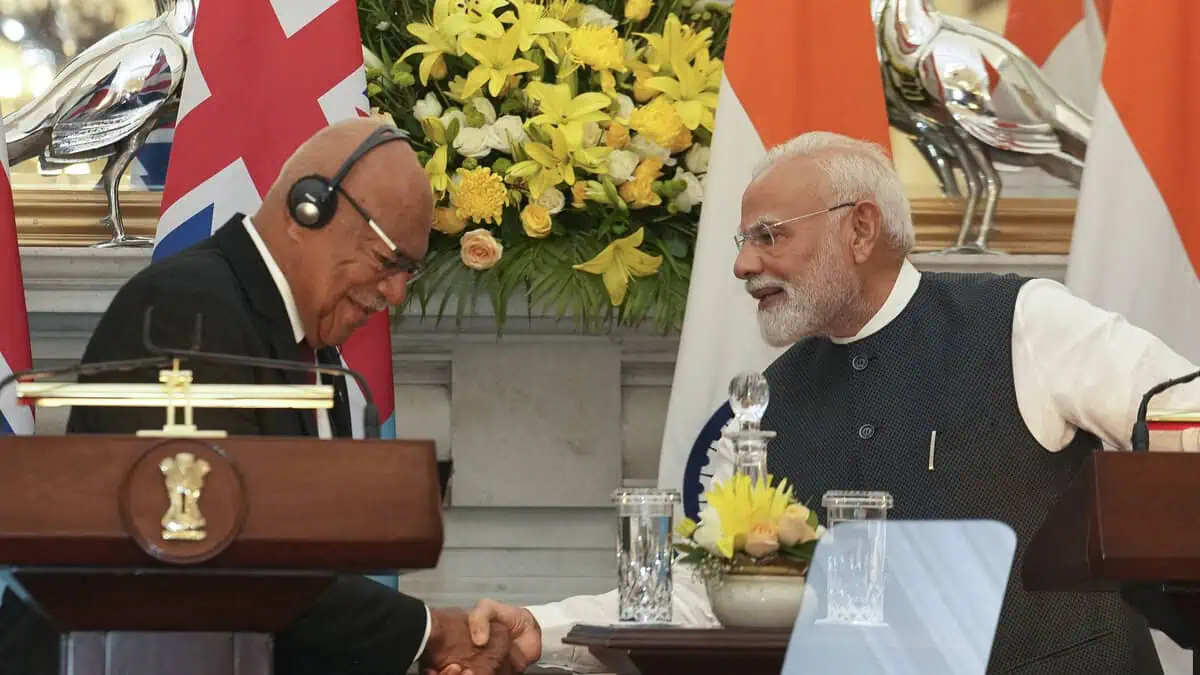
In a significant move that underscores India’s commitment to its “Act East Policy” and strengthening bonds with the Pacific Island nations, Prime Minister Narendra Modi held high-level talks with Fiji’s Prime Minister, Sitiveni Ligamamada Rabuka, on August 25, 2025. The meeting, marked by warmth and strategic clarity, culminated in the signing of seven key agreements, paving the way for a new chapter in bilateral cooperation spanning defence, climate change, trade, and development.
This high-profile diplomatic engagement shifts the spotlight onto Fiji, a nation often synonymous with azure waters and pristine beaches. But beyond its postcard-perfect imagery, Fiji is a key geopolitical player in the South Pacific, and this meeting solidifies its growing importance on the world stage.
A Meeting of Minds: Strengthening the India-Fiji Bond
The talks between the two leaders were characterized by mutual respect and a shared vision for a stable and prosperous future. PM Modi welcomed PM Rabuka, highlighting the deep-rooted historical and cultural connections between the two nations, forged by the Indian diaspora that has called Fiji home for over a century.
Echoing this sentiment, PM Rabuka expressed his gratitude for India’s consistent support. He acknowledged India’s role as a vital development partner and expressed keen interest in deepening collaboration, particularly in areas of technology, healthcare, and capacity building.
The Core Outcomes: Decoding the Seven Key Agreements
The cornerstone of this diplomatic engagement was the signing of seven Memoranda of Understanding (MoUs). These pacts are designed to translate the leaders’ vision into concrete action:
- MoU on Defence and Security Cooperation: This is a pivotal agreement, focusing on enhancing maritime security, joint training programs for defence personnel, and capacity building. Given Fiji’s strategic location and shared concerns over maritime domain awareness, this pact is crucial for regional stability. It includes potential cooperation in hydrography and disaster response.
- MoU on Climate Change and Environmental Protection: As a low-lying island nation, Fiji is on the front lines of the climate crisis, facing severe threats from rising sea levels and extreme weather events. This agreement solidifies India’s support for Fiji’s climate resilience efforts, promising collaboration on early warning systems, climate-smart infrastructure, and adopting renewable energy technologies.
- MoU on Trade and Investment Enhancement: Both nations agreed to reduce barriers to trade and encourage bilateral investments. The focus will be on sectors where India excels and Fiji has needs, such as pharmaceuticals, information technology, and renewable energy. This aims to create a more robust economic partnership that benefits both economies.
Beyond Diplomacy: Why Fiji Remains the World’s Favorite Paradise
While the political headlines are dominating the news, this renewed focus on Fiji reminds the world of its unparalleled natural beauty. For years, long before it became a hub of geopolitics, Fiji has been the crown jewel of the South Pacific, a dream destination for travelers seeking solace and adventure.
The Irresistible Allure of the Fijian Islands
- The People and the Culture: The true heart of Fiji is its people. Renowned for their warmth and hospitality, the Fijian greeting of “Bula!” (meaning “life” and “hello”) is infectious. The culture is a rich tapestry of indigenous Fijian, Indian, European, and Chinese influences, creating a vibrant and unique society.
- Unparalleled Natural Beauty: Imagine soft, white-sand beaches fringed by palm trees, waters that shift from crystal-clear lagoons to deep blue depths, and lush, green volcanic interiors. It’s a landscape that promises pure relaxation.
- A Hub for Adventure: From world-class snorkeling and scuba diving on breathtaking coral reefs (like the Great Astrolabe Reef) to surfing legendary breaks, zip-lining through rainforests, and trekking to hidden waterfalls, Fiji is an adrenaline junkie’s playground.
- Luxury and Seclusion: Fiji is famous for its exclusive private island resorts, offering unmatched privacy and luxury. Many of these resorts are home to some of the world’s most stunning overwater bungalows, making it a top honeymoon destination.
According to a report from the United Nations World Tourism Organization (UNWTO), Fiji’s tourism sector has shown remarkable resilience and growth, consistently ranking as a top desired destination for travelers from Australia, New Zealand, and North America.
The Climate Challenge: A Paradise at Risk
The recent agreements highlight a critical reality: this paradise is vulnerable. Fiji’s government has been a global advocate for climate action, as the nation faces an existential threat. For the conscious traveler, understanding this adds a layer of depth to a visit. Supporting eco-resorts and responsible tourism operators who prioritize sustainability is more important than ever. The nation’s efforts in conservation, such as protecting its marine ecosystems, are a crucial part of its future, a fact underscored by its leadership’s focus on climate pacts, as seen in this recent meeting.
A study by the Intergovernmental Panel on Climate Change (IPCC) has consistently highlighted the Pacific Islands as being disproportionately affected by global warming, making international cooperation, like the India-Fiji pact, absolutely vital.
Looking Ahead: A Strategic Partnership for the Future
The meeting between PM Modi and PM Rabuka was far more than a diplomatic formality. It was a strategic recalibration of a historic relationship, aligning it with 21st-century challenges and opportunities. The seven pacts provide a comprehensive framework for a partnership that is both pragmatic and visionary.